“This is a real Indian state. And I wish they’d give it back to them.” — Private Billy B. Hobby, in a letter home from Camp Gruber, Oklahoma, training ground of the 42nd ‘Rainbow’ Division in WWII
The land is red.
Clay, hills, creek beds cut through the landscape like a wound that never quite closes. The hills rise and fall with blackjack oak and persimmon and black haw, roots driving down into the earth so far they intertwine with whatever is buried there. The sky is a canopy of uneasy blue. A solitary yellow-billed bird calls out from the thickness of trees, a hollow, liquid sound, descending, like the staccato of rain on metal. Redbud and pawpaw line the creekbeds. A brook bends and gurgles. The cicadas tick and whir and sing.
This is not soft country; it is hard land, the kind of land that makes you work hard to hold it. And it holds, the way a body holds everything done to it, everything buried within it, through all its time.
Before it is Rainbow land, it is Raincrow land.
Before it is numbered and mapped and parceled into a sixty-thousand-acre training ground with barracks and mess halls and motor pools, it is wild, unruly land. Before the boots go down and the rifles learn to fire in formation and the soldiers march up and down the rolling hills, a woman makes her home here.
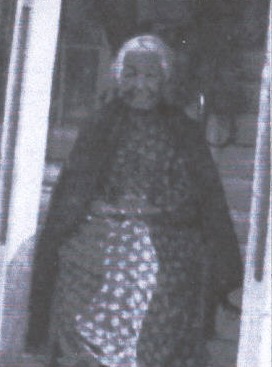
Her name is Rachel Raincrow.
There is a pension file, page after page, in the looping handwriting of clerks paid to drip ink on paper and move on to the next name, the next ledger line. Each entry says the same thing:
Widow of John Raincrow.
Mother of Washington Raincrow.
Never her signature.
Always an X, with the words: “her mark”.
She is more than a widow, more than a mother, more than a mark.
Rachel Raincrow is born in 1807, in the Cherokee homeland in the Southeast, in the hills and rivers her people have born, bred, and died on for centuries before any white foot walks there. Born the daughter of a chief, Joseph Oode Sah de You Duha, she is thirty-one years old when soldiers arrive and tell her family there is little time to gather what matters most, and there is no time to grieve what will be lost.
The Cherokee call it Nunna daul Tsuny, the trail where they cried. The journey west takes months, and moves through cold and rain and disease and death. Thousands are buried along the trail, left to animals, to namelessness, and the sorrow of a life unremembered. No ceremony, no sanctity. Just goodbye and move along.
Rachel lives through it all.
She is brought to the rolling hills of Indian Territory with her parents, and they settle in what will eventually be called Oklahoma. This land is not given to her by inheritance or legacy but she tends this new ground and its bird-calls, its coyote song, its thick mosquito twilight. She puts down roots, literally, pressing seeds and cuttings into the earth, coaxing the lifegiving ways of her people into this earth. Black haw. Persimmon. Cherokee rose. The soil is supple and warm from the day's sun and gives under her hands.
Two dozen moons later, the leaders of her native people circle on the bluff above the lake they have named Tearful Waters. The night air is still. Below them the water holds the moon without moving. The insects have gone quiet. With calloused and capable hands they ignite a fire and carve symbols into stone; determination and humiliation glow from the cracks time has etched across their skin.
A Y-shaped section, its surface carrying their people’s history is broken off and slowly, intentionally passed around the circle. One elder at a time invokes the elements as he presses the fire-heated rock to his breastbone.
Tearful Waters holds the grief. The fire burns steady in their hands, carried from a homeland they were forced to leave and refuse to relinquish in their hearts. The earth takes what is given to it, the heat, the ash, the words spoken low into the smoke. It billows through the air and seals the circle, holds the sound of what is whispered and cried, carries it up into the night and across the dark bowl of water, and sets it into the land.
An elder feels his final heartbeat, and, cradling the newly carved talismanic stone against his body, is lain to rest in the bluff. An oak rises from that place. Its roots bend, shaping around and within what he was. Whether or not Rachel’s father, Chief Joseph, is in this circle, the record doesn’t say. Either way, Rachel’s bloodline intersects with what unfolds on the land this night.
Rachel watches the Civil War move through their land, skirmishes cutting through Cherokee fields, soldiers taking what they can carry, what they can break, what they can burn in a valley split open. She buries her husband. Then her son. They are both taken by disease while serving in the Indian Regiment at the nearby fort, at watch against an encroaching Confederate Army.
Oklahoma becomes a state in 1907, and with statehood comes the government’s dissolution of the Cherokee Nation. Through the resulting Dawes Act, Rachel is given an allotment, her own ground, made official at last with a deed that has her name on it and the government’s seal. She is one hundred years old.
Then one hundred and one. Then one hundred and two. Then one hundred and three.
Then, in 1910, a census-taker walks up to her door with his ledger and his pen and writes her name. Three months later, Rachel Raincrow inhales her last breath, then exhales one long and lingering sigh that floats upward into a blue Oklahoma sky. She is returned to the earth with song and flowers and prayers in the Raincrow family cemetery, just down the crooked road from the Tearful Waters.
The rain crow, the yellow-billed cuckoo whose name Rachel carries as her own, feels the sky with its full, feathered body, reading the pressure shift before the clouds gather and before the light changes. The air thickens. Into silence the rain crow calls ka-ka-ka--kow-kow-kowlp. A storm is on its way.
The storm arrives in December of 1941. The whole world holds its breath. The United States Army needs sixty thousand acres, and needs it fast.
The Army surveys the land around Braggs and Muskogee and sees opportunity. It sees scattered farms and the Cherokee and white families on them, generations of people who have put their hands and hearts to taming a life out of the rough land here. President Roosevelt believes the Depression has already ruined these people, and that a fresh start somewhere else would serve them better. Their land is condemned and the families are given a piece of paper that offers them a sum of money and forty-five days.
Forty-five days to decide what can be carried and what must be left behind: the crops in the ground, the tools too heavy to load, the particular way the afternoon light falls across the timber porch of the house they built by hand, and the graves of their ancestors where they have anchored their meaning.
What comes next is the engineers, with shovels and tools and a task: the cemeteries dotting the acreage must be opened. The deceased Raincrows, like all the other pockets of bones tucked around these hills, are dug up, placed into trucks, driven down the road, and reinterred.
Rachel Raincrow travels again, one more time, in her afterlife.
When you know where to look, the underbrush still shows you where the family rested, cocooned in their earthen nest. Small indentations pockmark the treescape where the graves once were, like leaf-covered foxholes. Like carved hollows where death has slept.
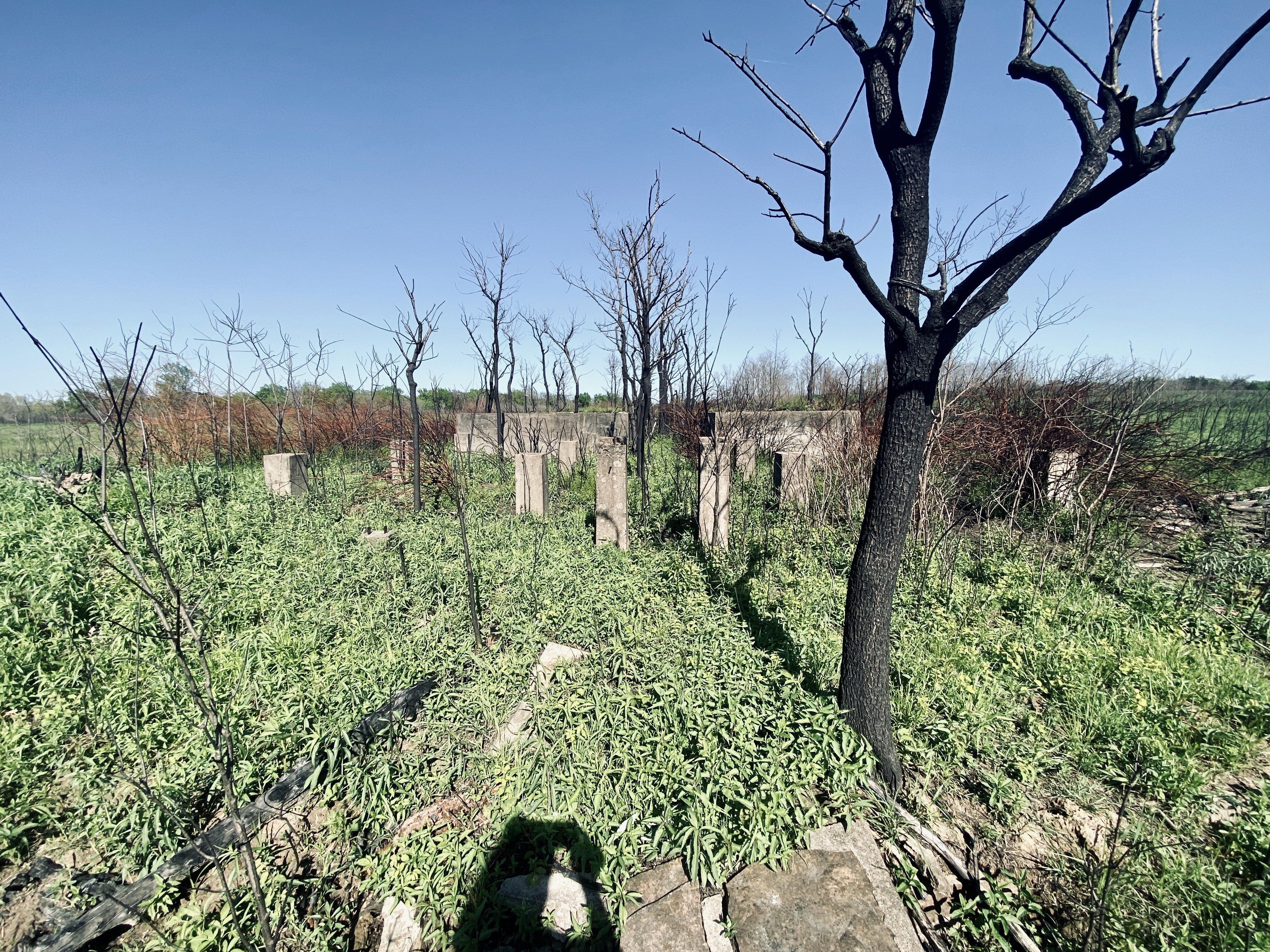
And the life Rachel nurtured in this ground with its petals and brambles remains, opening and fruiting. Fed by the flesh and bones of the people who tended them, the ever-hungry roots reach down still, and the Raincrows rise back up through the bark and the blossoms.
The acreage has a government boundary now. It is called Camp Gruber. The barracks go up next to the mess halls, motor pools and training ranges. All of it rises fast, one new building every twenty minutes, twenty-four hours a day. Where the rain crow called and the fresh showers spilled and kicked up the scent of rain on dust in wide open swaths of human-free air, now there are hammers and saws and the shouts of fast-moving men.
The officers’ club, where rank insignia will sparkle in twilight as glasses clink to the future of America, is constructed a few footsteps from where the elder's oak has been growing for a century. The bluff now holds a splash of tall trees. They watch as the log structure rises.
The Rainbow soldiers come.
These young men form the fifteen-thousand deep ranks of the 42nd “Rainbow” Infantry Division. Every trainload is greeted by the brass band playing “The Caissons Go Rolling Along”, whose composer Camp Gruber is named for. They spill onto the tracks and the platform in their olive drab uniforms, packs on their backs, and blink in the sunlight. This is a scene from an old wild west movie: a single small building, a railing, a horse with its head hanging down, a white sign with six black block letters. BRAGGS. On the other side of the tracks, a short march away, a different kind of ceremony waits.
The fire invoked here is that of a whole world in flames. The location is the vast parade ground, an expanse of baked earth that sends the heat back up through the soles of fifteen thousand men. Dust chokes their throats as they call out the Rainbow Division anthem at the top of their lungs: “There’s a Rainbow in the Army, like a rainbow in the sky … let our voices show in our hearts we know that a true Rainbow will carry on, hey!”
As their general reviews them they offer, in unison, the Rainbow salute. Smoke cans swirl out the Rainbow colors of red, yellow, and blue. The sun is merciless and their uniforms are pools of sweat. There is no ceremonial rock pressed to the breastbones of elders, but there is a different sort of leader, and there is a flag.
The beloved Rainbow flag of World War I passes from elderly yet battle-hardened hands to younger hands destined for a new fight. The banner lifts, its colors cutting through the breezeless afternoon, through the heat and scent of thousands of men. The ground hums with marching boots and songs sung. General Harry J. Collins receives the flag and brings it to his lips. In the Cherokee way, the U-nv-go-la-dv, the rainbow, is the garment worn by the bringers of the storm. On Collins’ soldiers’ shoulders: the rainbow patch, a symbol pressed into men, carried on their shoulders the way the elders brought the stone to their chests.
His wife Maude is not here today. Their daughter Patricia is.
Maude Collins, a former Miss Texas, survives a car wreck. Glass cuts her face, her jaw breaks, and three years of surgery follow. When she is finally able to ride again, her husband comes around a bend and finds her beneath her horse, her pelvis crushed. She is permanently paralyzed. The woman who once crossed open ground on horseback cannot stand beside him on the parade ground at Gruber.
Patricia has been waiting more than a year for news of her husband. The telegram that came was yellow and reported him missing in action. At Camp Gruber she gathers the officers’ wives, women living in Braggs, Muskogee, and wherever else there is room for Rainbow families. They meet, pack boxes, and write letters.
By the time the Rainbow prepares to leave Gruber, women appear throughout the camp record. Black WACs serve inside an Army that depends upon their work while keeping them apart. Private Sarah A. Brazier drives a colonel. Blanche Williams Dougherty brings books into the hospital wards. Phyllis Joneward handles Red Cross cases. Nedra Bernay, Bertha Jordan, and Vezelle Reeder keep Service Club No. 2 open. Across the road in the prisoner-of-war camp, Betty Hardcastle serves as secretary to its military police commander.
Throughout Gruber, paper moves through women’s hands: orders, reports, correspondence, letters typed, stamped, sorted, and sent beyond the gates. Among them are the letters between Barney Parrish and his sweetheart, Vicki.
Barney writes from the back of an ambulance on the mortar range and calls Vicki his “future Mrs.” He tells her he has requested a furlough to marry her. “I’ve always said I wouldn’t do so while in the Army,” he writes, “but there have been some changes made.” Barney gets his furlough, and he marries his Vicki. He returns to Gruber, the hours accelerate, the training grinds on.
Before anyone is ready, the trains return. The soldiers pile back on in the exact place they piled off months before.
Vicki is there that day in November when Barney leaves with his regiment.
Her belly is round with their whole world. Vicki stands on the platform with one hand there, the other raised against the late autumn sun.
She holds Barney in her sight for as long as she can.
The crowd around her is compressed into one moment: a sea of soldiers in uniform, women with wet faces, children waving flags, the band playing. It is a cacophony of pretend bravery, a crowd of cheers and tears. Collins is there, standing with his staff among the families and the clamor and the dust.
The train lurches. Then moves as its whistle cuts through the crowd. Vicki watches it go.
One hand on their child. One hand raised toward her husband.
In two months, Barney will be dead.
Four and a half weeks after that, Vicki will go into labor. The umbilical cord squeezes a full circle around the neck of Barney’s daughter as she slips out into the bright yellow lights of the hospital room, red and blue from head to toe.
She lives, and grows up knowing that her father did not.
In spring, daffodils still rise from the hollows where the Raincrow graves once lay.
Before the color cuts through the sky, in the liminal edges surrounding every living thing, the rain crow calls.